
00
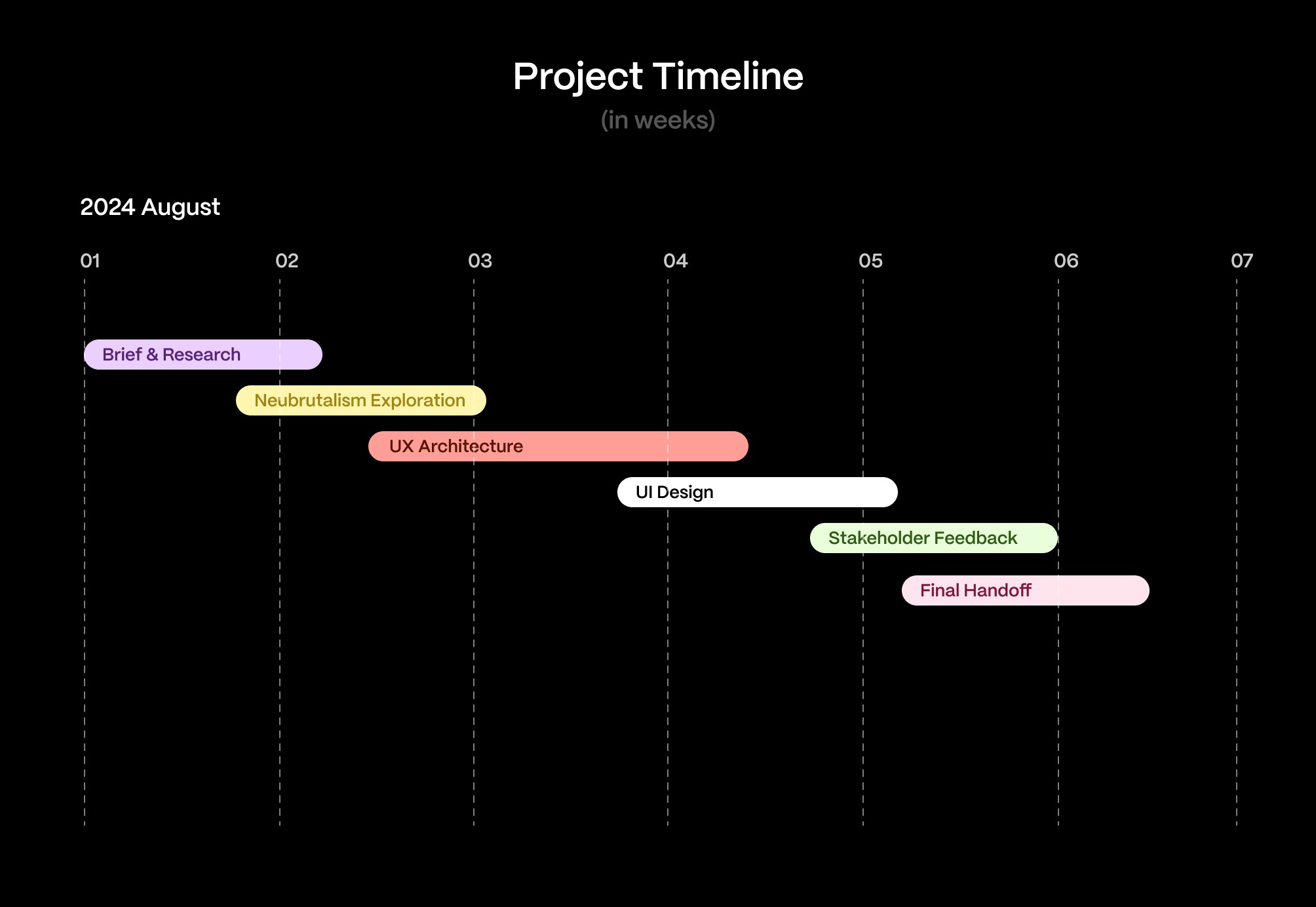
problem
University life has more going on than any student can track — events, communities, hotspots, people No single place existed for campus-specific social life; students bounced between WhatsApp groups, Instagram, and word of mouth A dating feature alone would never get institutional approval The real ask was buried: build something colleges would say yes to, that students would actually use
solution
A full campus social platform: events, communities, hotspots, posts and a companion tab Each feature earned its place independently, and together they created a reason to open the app daily The companion tab brought Tinder-style matching into a space where it felt natural, not predatory University-exclusive access meant every person on the app was already in the same building as you
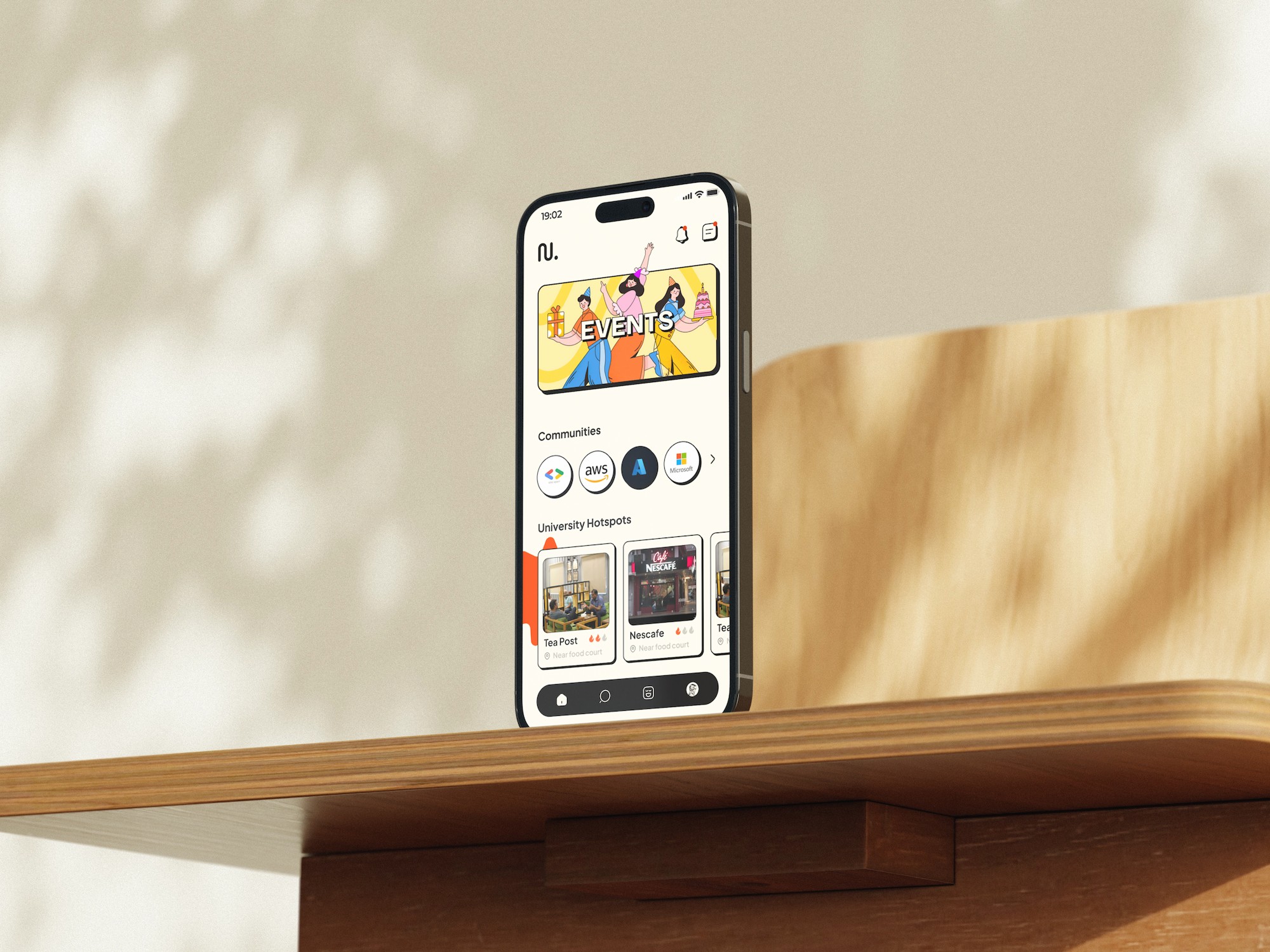
What? A campus social platform with dating built in — designed so universities would actually approve it.
Why? The client wanted a dating app. Universities would never allow one. The solution was to build something larger, where the dating feature became just one tab among many.
The constraint that changed everything Student ID login only. You don't choose your university from a list. You're placed into it, verified, and accountable. Every person you match with is real, enrolled, and in the same building as you.
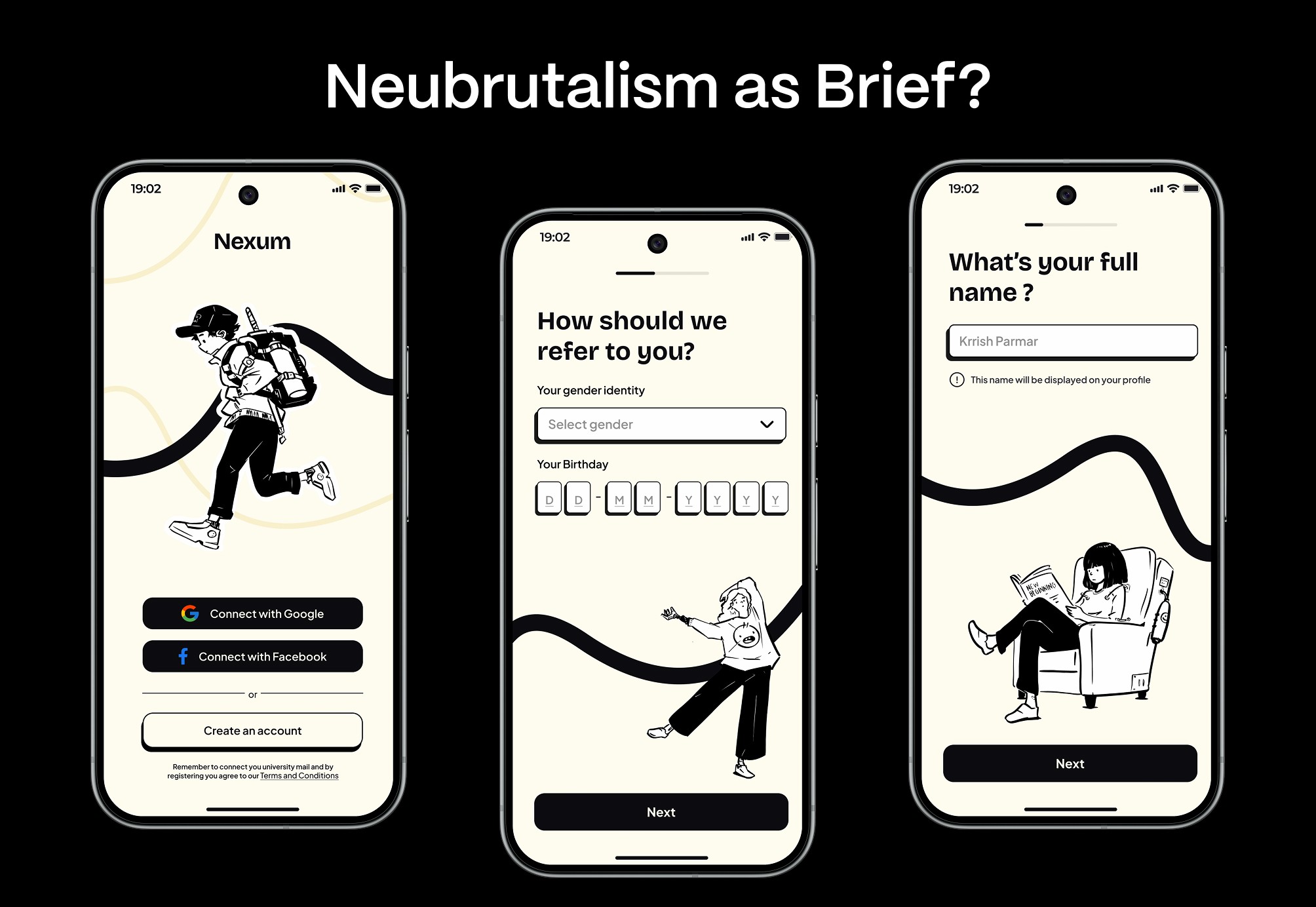
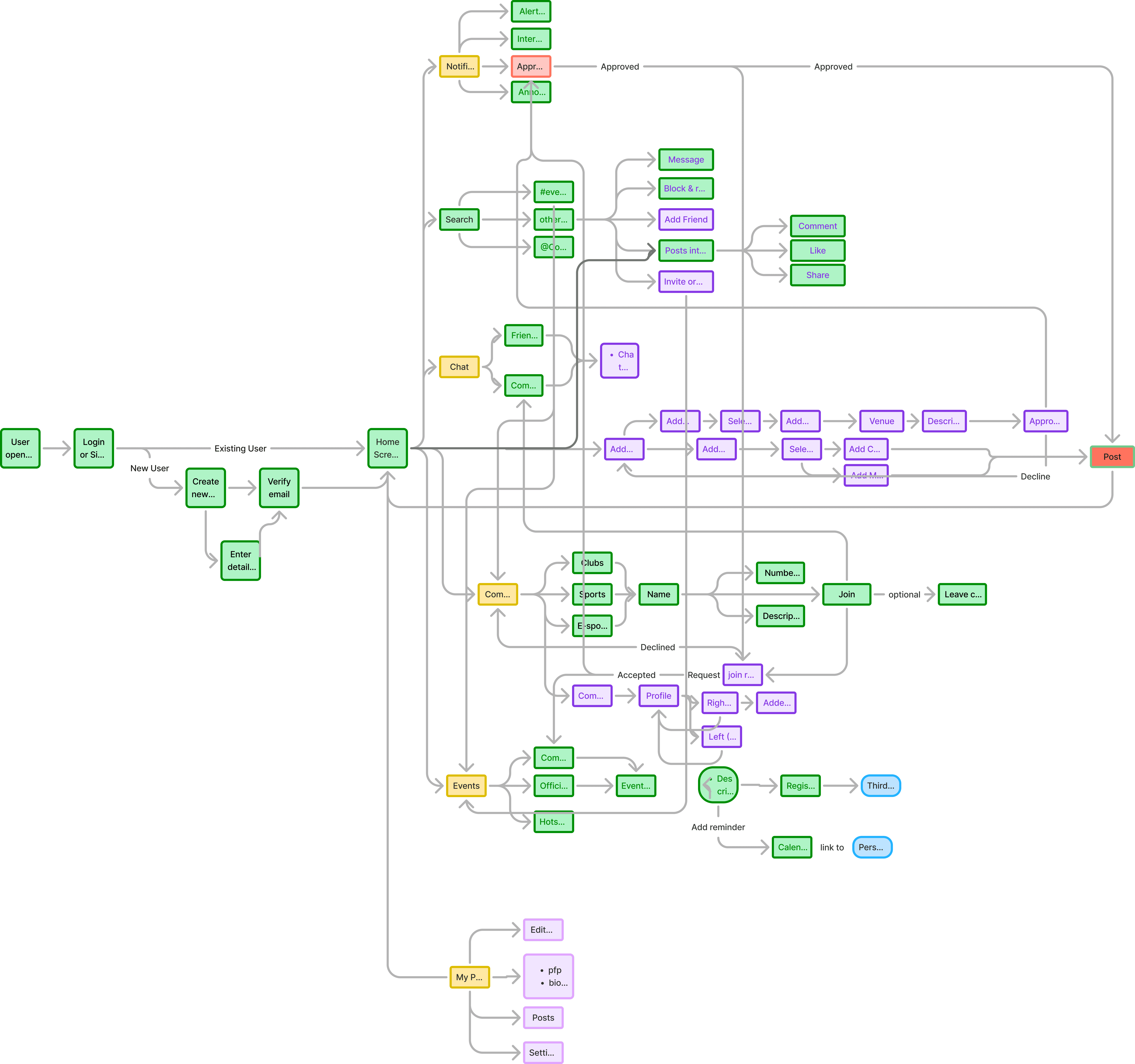
The onboarding had one job. Collect enough to make matching meaningful — name, nickname, birthday, photos, passions, hobbies — without feeling like a form. It ends on a congratulations screen. Lightweight in feel. Thorough in data.
Why neubrutalism? Gen Z doesn't trust polished. Neubrutalism — raw borders, flat colour, bold type, deliberate imperfection — feels honest. Gumroad built credibility with a generation that rejects corporate gloss. A platform living inside a university should feel like it belongs there, not above it.
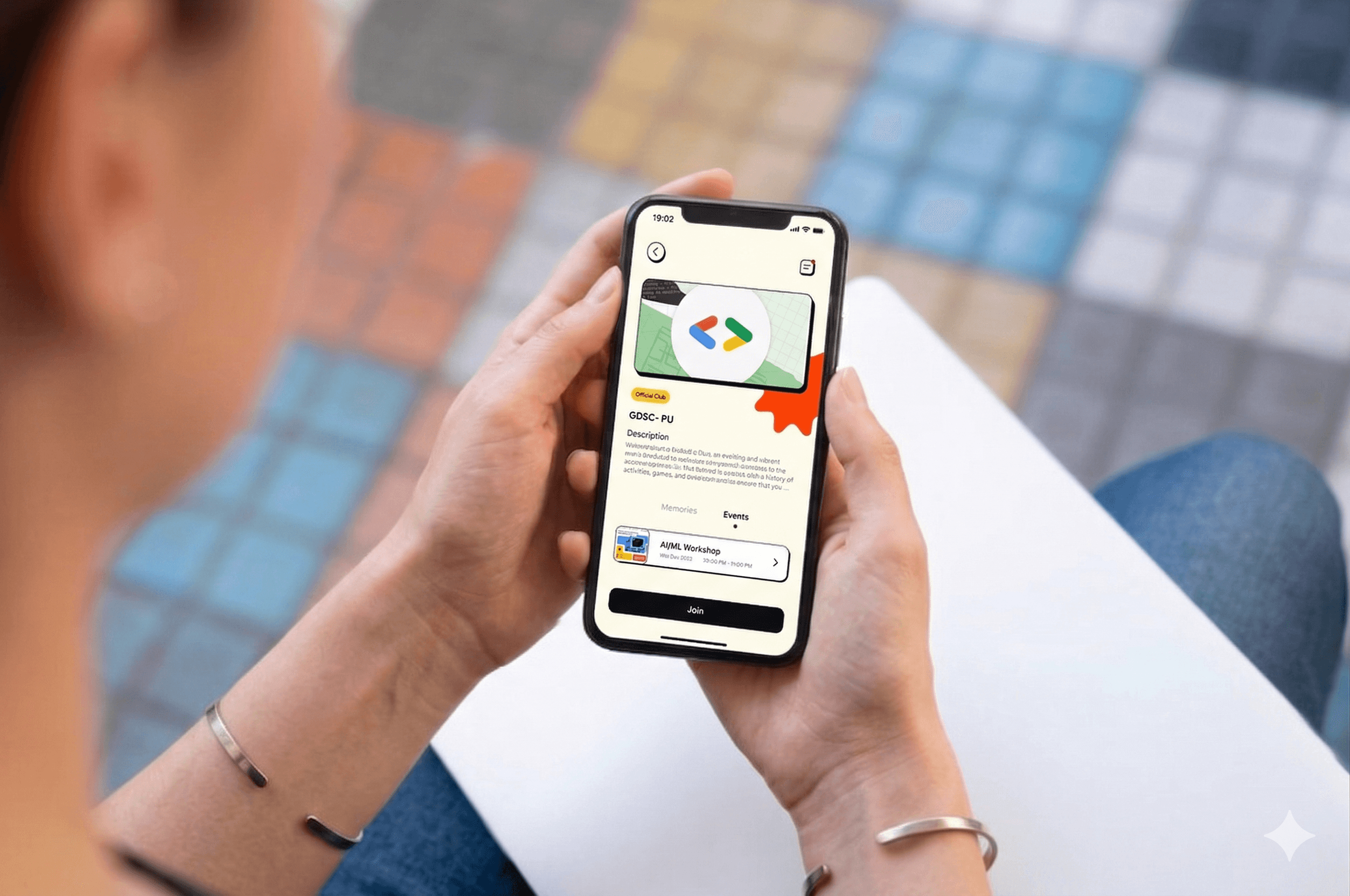
What the userflow revealed Five features sounds simple. Mapping them together exposed how interconnected everything was — events linking to communities, hotspots linking to the feed, onboarding feeding into matching. The architecture had to hold all of it without feeling heavy. Every flow had to end somewhere useful.
Want the full picture? I'll walk you through the Figma file personally.

Built Nexum so you don't end up antisocial like them.
year
2024
timeframe
Founding Designer
tools
Figma
category
Startup